
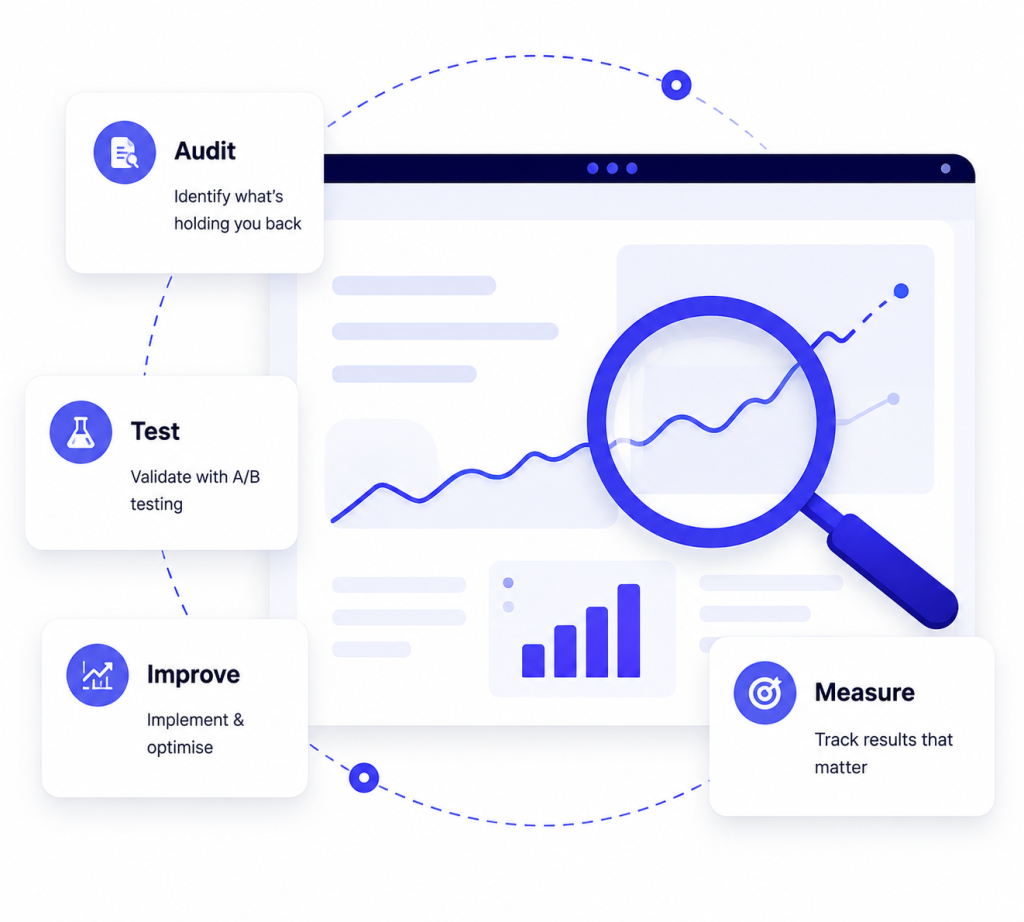
If people are arriving and not enquiring, more traffic is the expensive fix. Usually something structural is in the way, and it is findable. We look at what visitors actually do, then change the smallest number of things that will move the number you care about.
If people are arriving and not enquiring, more traffic is the expensive fix. Usually something structural is in the way, and it is findable. We look at what visitors actually do, then change the smallest number of things that will move the number you care about.
Every additional required field costs completions. We cut the form to what you will genuinely act on and move the rest to the conversation that follows.
A visitor should be able to answer what this is, whether it is for them and what to do next without scrolling. That is a copy and hierarchy problem far more often than a design one.
Slow pages lose people before any of the persuasion matters, and it is worst on exactly the mobile connections your ad spend is buying.
Reviews and credentials work next to the decision. On a separate testimonials page they are mostly decoration.
Pages offering call, form, chat, download and newsletter with equal weight convert worse than pages that choose.
Buttons that are too small or too close together fail quietly — the visitor blames themselves and leaves.
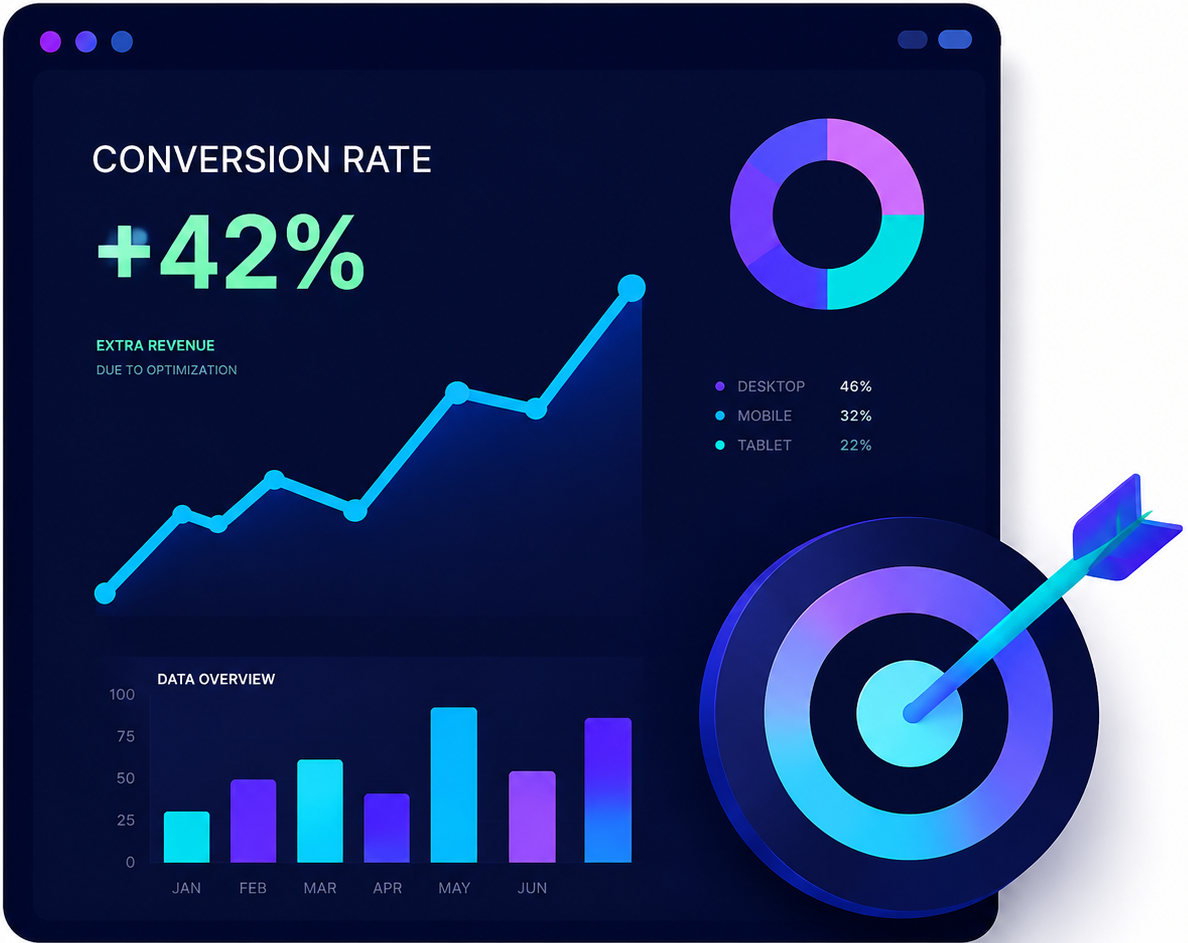
We will not put a number on it before looking, and any agency that does is guessing. What we will tell you after the audit is which specific problems we found, how big each one looks, and which we would fix first.
Optimisation is the right call when the structure is sound and the problems are local. If the information architecture is wrong, the site is unmaintainable, or it fails on mobile in ways that cannot be patched, a rebuild is cheaper than an endless series of fixes. We will tell you which we think it is, including when that is the smaller invoice.
Only where you have the traffic for the result to mean anything. Below that threshold we make evidence-led changes and measure before and after over a sensible window, which is honest about its own limits rather than dressed up as a controlled experiment.
Speed and form changes show up almost immediately in the data. Structural changes to page architecture take longer to read, partly because search visibility shifts slowly and partly because you need enough enquiries for the before-and-after comparison to mean anything. For most sites we would look at a full month before drawing conclusions, and we will say when a change is too small to measure honestly at your traffic level.
Yes, and a lot of this work is exactly that. WordPress and Elementor are where we are quickest, but we can audit any stack — implementation on an unfamiliar platform may need your developer for the last step.
Thirty minutes, your time zone. We will tell you honestly whether a rebuild is the right spend or whether fixing three things on the current site would do more.